Industry
Refractories for the Glass Industry
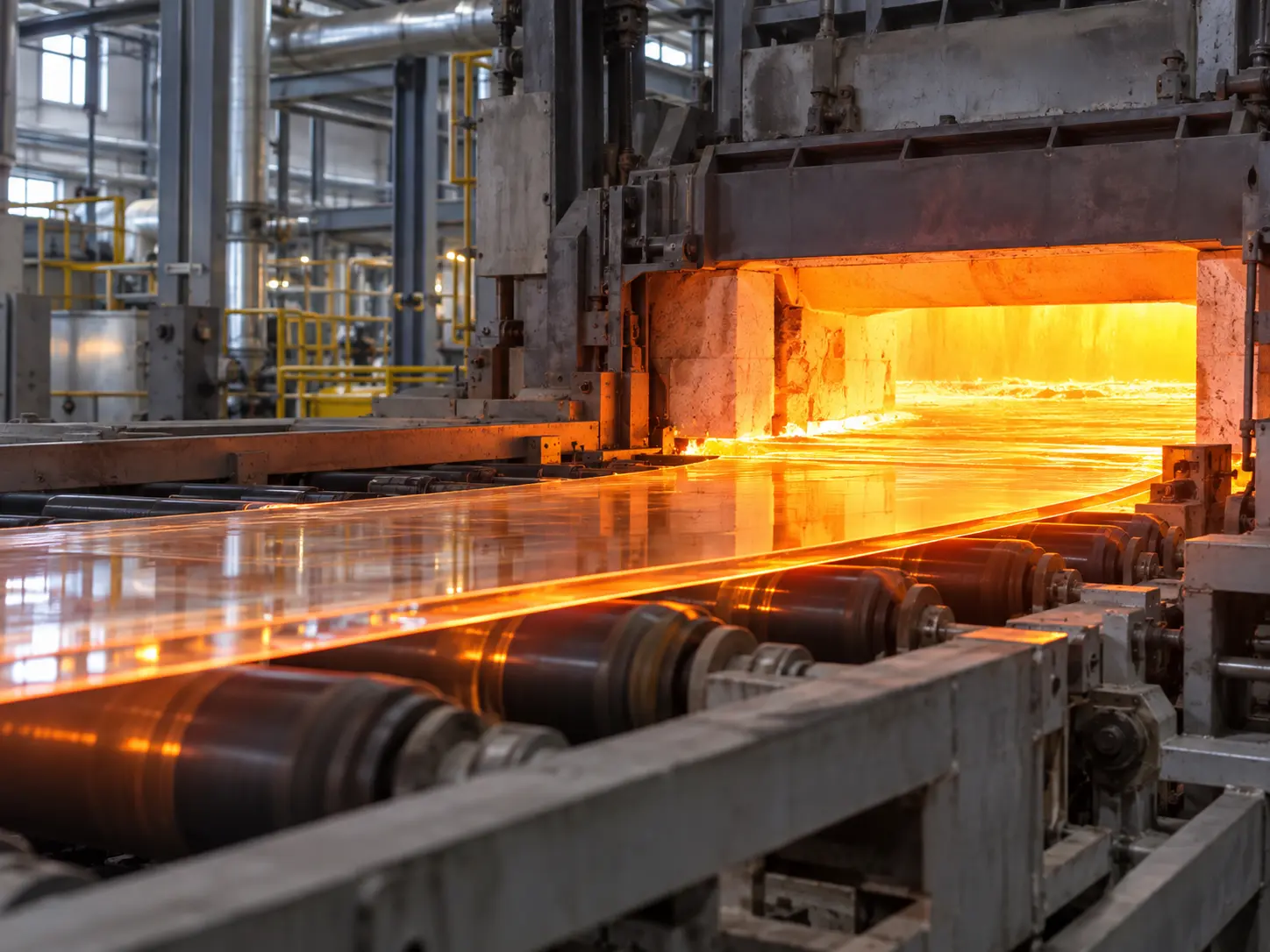
Refractories in the glass industry line the melting tank, the superstructure, the working end and forehearth, the throat and the regenerator. Different furnace types take different materials, in fused, siliceous and magnesia groups: silica, clay, high alumina, sillimanite, mullite, fused mullite, zirconia-corundum, fused corundum and zirconium-containing refractory bricks.
Refractory Requirements — Glass
The glass technical reference begins with a point that shapes the whole page: refractory selection in this industry follows the kiln, not the industry. It lists more than a dozen kiln types in use and states that the choice between them is made on product characteristics together with output capacity, quality requirements, the melting temperature system, the forming system, the fuel type and investment cost. It then divides the materials themselves into fused, siliceous and magnesia groups.
Its two furnace drawings give the zone vocabulary used below. The float glass furnace drawing names the feeder, front wall, superstructure, crown, port mouth, regenerator, branch flue, check brick, auriculate bath, melting end, neck, cooling end, melter sidewall and tin path bottom. The horse-shoe flame furnace drawing names the doghouse, melting tank, port arch, port neck area, breast wall, refiner, throat and channel. A third drawing separates the regenerator into crown, three wall sections and four checker-work sections.
Every position in the table below is the application sentence printed on that material’s own page in the technical reference. Nothing is generalised from one kiln type to another, and no single universal lining is presented. Terms with no catalogue equivalent are listed underneath and remain available for enquiry.
Where Refractories Are Used
5 equipment and zones
Melting Tank
Melting End / Melting Tank
The technical reference drawings name the melter sidewall, the auriculate bath, the tank bottom or paving, the doghouse and the feeder end of the melting tank.
Superstructure and Crown
Superstructure / Crown / Breast Wall / Port
The technical reference drawings name the crown over the melting end and over the cooling end, the breast wall, the front wall, the port mouth, the port arch and the port neck area.
Working End, Throat and Forehearth
Refiner / Neck / Throat / Channel / Cooling End
The technical reference drawings name the throat, the neck, the refiner or working pool, the channel or feed channel, the cooling end and the tin path bottom.
Regenerator
Regenerator / Checker Work / Branch Flue
The regenerator drawing separates the crown of the regenerator, the upper, middle and lower sections of the side wall, and the top, upper, middle and lower sections of the checker work.
Cold and Hot Repair
Unshaped series
The technical reference groups its ramming masses and castables as materials for cold repair and hot repair of the furnace bottom safety layer and the corresponding parts of the kiln.
Refractory Selection by Equipment
Melting Tank
7| Zone | Refractory type | RISING product |
|---|---|---|
| Melting pool wall bricks, paving bricks and feeding ports | Fused Zirconia Corundum Brick AZS-36 | |
| All-electric melting furnaces, liquid flow holes, kiln sills, bubbling bricks and feeding-port corner bricks | Fused Zirconia Corundum Brick AZS-41 | |
| Pool wall bricks, paving bricks and the upper structure of the melting pool | Fused Zirconia Corundum Brick AZS-33 | |
| Walls, bottoms, throats, electrode blocks and sills of high-quality and special glass furnaces | Fused High Zirconia Brick | |
| Bottom and upper structure of the molten pool | Zirconia Brick (zircon) | |
| Bottom of the molten pool and lattice support arch | Sillimanite Brick | |
| Glass kiln bottom | Ultra-high Alumina Brick |
Superstructure and Crown
7| Zone | Refractory type | RISING product |
|---|---|---|
| Large sill, breast wall, regenerator roof and target wall | Silica Brick for Glass Kilns | |
| Superstructures with little raw-material carry-over and full-oxygen kilns | Fused β-Corundum Brick | |
| Small furnace, melting pool and working pool upper structures, roof and feeding channel | Re-sintered Fused AZS Brick | |
| Small furnaces, melting pools, working pool upper structures and feed channels | Re-sintered Fused Zirconia Mullite Brick | |
| Small furnaces and feeding channels | Re-sintered Fused Corundum Mullite Brick | |
| Regenerator middle and upper parts, small furnace wall and roof, molten pool and feeding channel | Sintered Mullite Brick | On request |
| Small furnace tongue and other key parts | Polycrystalline Mullite Composite Brick | On request |
Working End, Throat and Forehearth
3| Zone | Refractory type | RISING product |
|---|---|---|
| Working pool wall, pavement, feed channel and passage of high-grade kilns | Fused α-β Corundum Brick | |
| Forehearths of the working pool | Fused Zirconia Corundum Brick AZS-33 | |
| Key parts of high-temperature kilns | High Purity Corundum Brick |
Regenerator
9| Zone | Refractory type | RISING product |
|---|---|---|
| Top of the regenerator on petroleum-coke fired kilns | Chrome Corundum Brick | |
| Upper and middle parts of the regenerator | Fused and Re-sintered Magnesia Brick | |
| Middle and lower parts of the regenerator | High-grade Sintered Magnesia Brick | |
| Upper and middle parts of the regenerator | Fused Rebonded / Fused Semi-rebonded Magnesia Chrome Brick | |
| Wall and lower part of the regenerator | Directly Bonded Magnesia Chrome Brick | |
| Top and bottom of the regenerator | Magnesia Zirconia Brick | |
| Lattice and wall of the regenerator | Low Porosity Clay Brick | |
| Lower part of the regenerator | Ultra-high Alumina Brick | |
| Upper partition wall of the regenerator | LP-LI-LC-Brick (low porosity, low iron, low creep) | On request |
Cold and Hot Repair
8| Zone | Refractory type | RISING product |
|---|---|---|
| Furnace bottom safety layer and upper structure, cold and hot repair | Zircon Ramming Mass / Zircon Castable | On request |
| Pool bottom, pool wall insulation layer and kiln upper structure | Zirconia Corundum Ramming Mass / Zirconia Corundum Castable | On request |
| Furnace insulation | Light Weight Insulation Castable | |
| Furnace insulation | Light Weight High Alumina Brick | |
| Furnace insulation | Mullite Insulation Brick | |
| Glass furnace heat preservation | Aluminum Silicate Fiber Board | |
| Glass furnace heat preservation | Calcium Silicate Board / Rock Wool Board / Composite Silicate Board | On request |
| Brick masonry throughout the kiln | Clay, High Alumina, Mullite, Corundum and Zirconium Refractory Mortars |
Refractory types are listed as named in RISING's technical references. A row reads "On request" where the material has no catalogue page yet.
Recommended Refractory Materials
21 linked products
Refractory Bricks
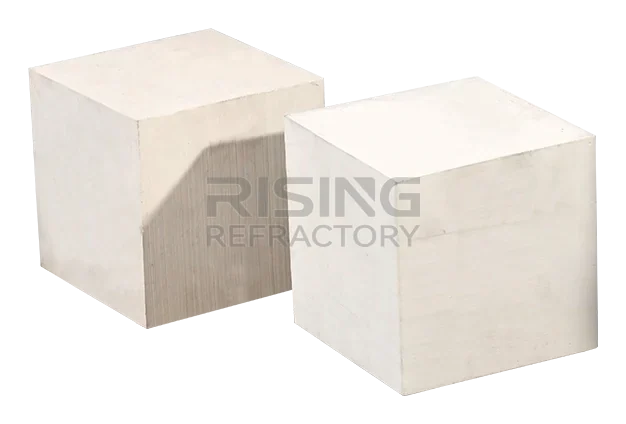
Fused Zirconia Corundum Brick (AZS)
Fused-cast AZS brick for glass tank furnaces, with high resistance to molten glass and low glass contamination, in grades AZS33Y, AZS36Y and AZS41Y with ordinary, quasi-void-free and void-free casting.
View ProductGradesAZS33Y · AZS36Y · AZS41Y
Refractory Bricks
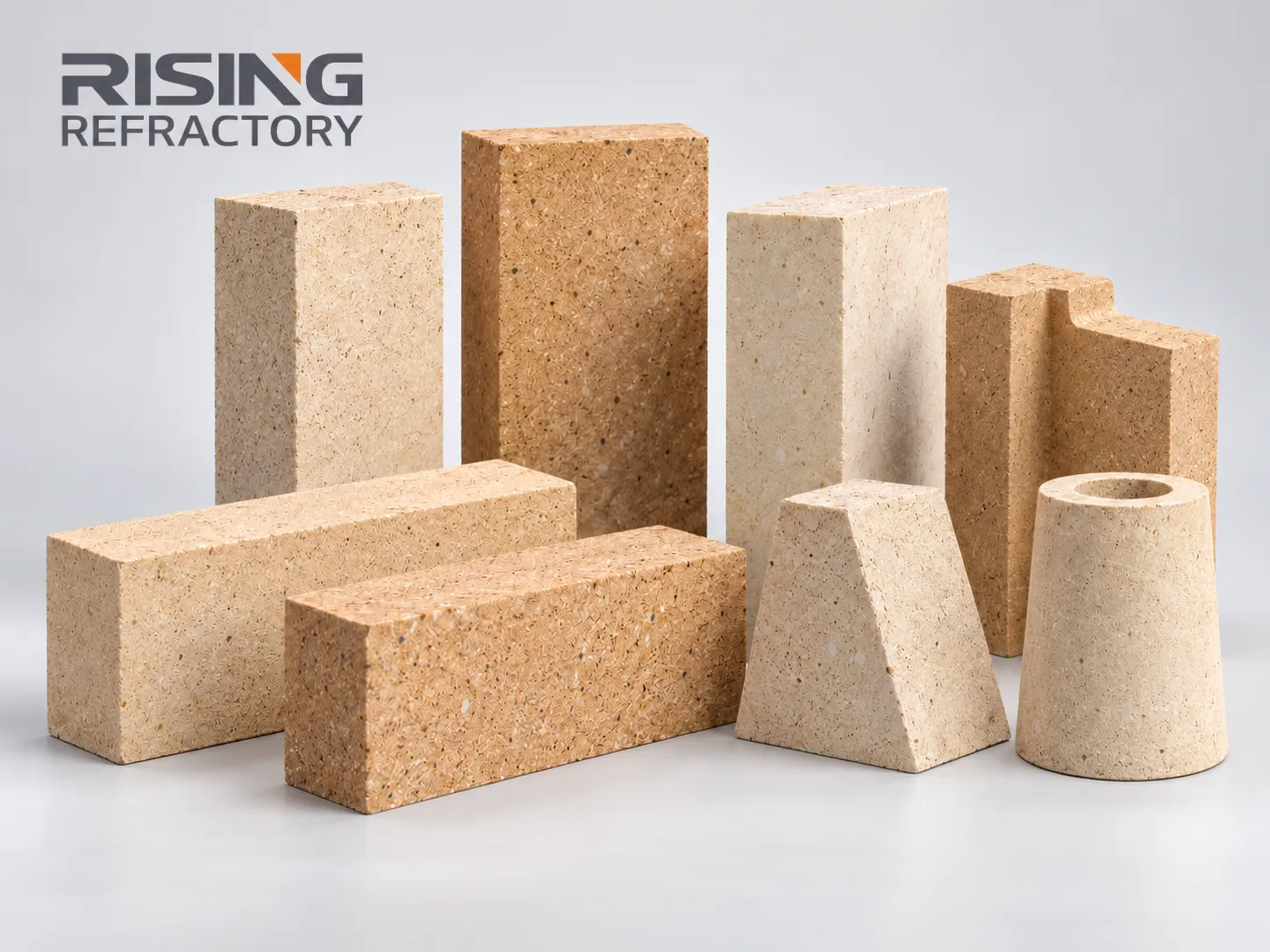
High Zirconia Brick
Brick of baddeleyite phase with a small glass matrix, giving extremely high corrosion resistance, very low blistering and stoning and almost no glass contamination, for glass furnace walls, bottoms, throats, electrode blocks and sills.
View ProductGradesHigh Zirconia Brick
Refractory Bricks
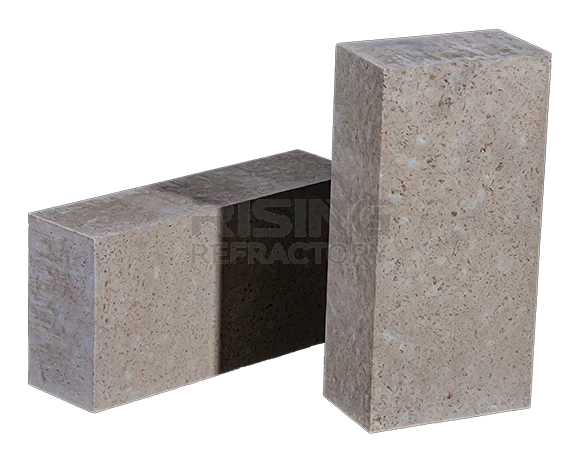
Dense Zircon Brick
High-density zircon brick with very low porosity, excellent mechanical strength and good resistance to molten glass, used mainly in glass melting furnaces. Grades ZS-G and ZS-Z.
View ProductGradesZS-G · ZS-Z
Refractory Bricks
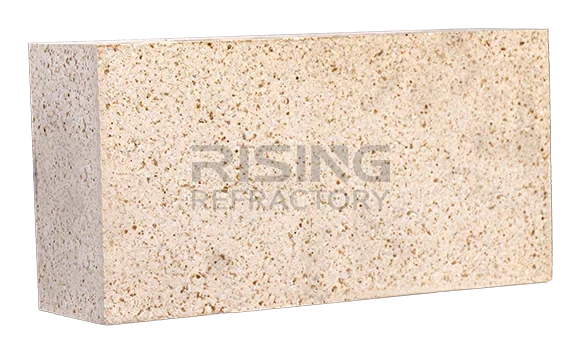
Sillimanite Brick
Sillimanite brick with a low thermal expansion rate, good resistance to metallurgical slag and molten glass, good hot wear resistance, low glass contamination and high refractoriness under load. Grades 65 and 60.
View ProductGradesSillimanite Brick 65 · Sillimanite Brick 60
Refractory Bricks
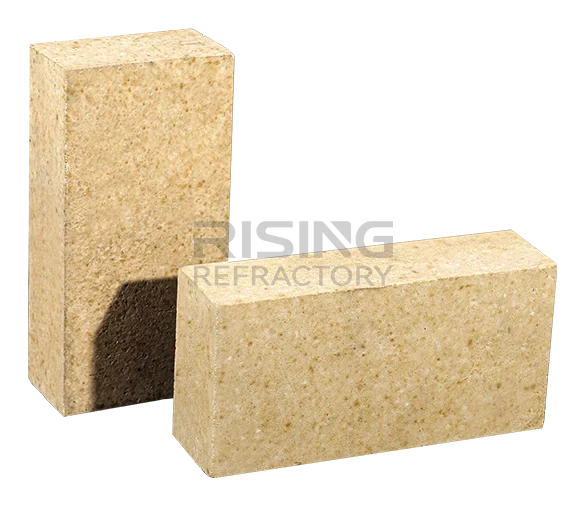
High Alumina Brick
Neutral alumina–silica refractory brick with resistance to both acidic and alkaline slag, high cold crushing strength and high refractoriness under load. Six grades from LZ-48 to LZ-80.
View ProductGradesLZ-80 · LZ-75 · LZ-70 · LZ-65 · LZ-55 · LZ-48
Refractory Bricks
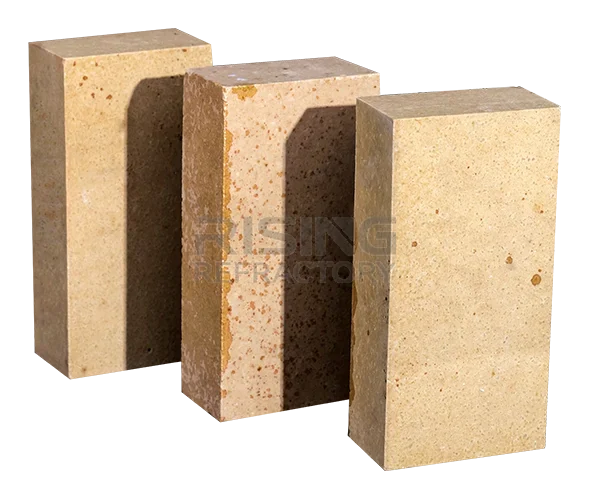
Silica Brick
Silica refractory brick with high hot strength and high refractoriness under load, resistant to acid slag and dimensionally stable in long-term high-temperature service.
View ProductGradesBG-96A · BG-96B · BG-95 · JG-94 · GZ-94
Refractory Bricks
Fused Corundum Brick
Fused-cast corundum brick based on α- and β-alumina crystal phases, with dense crystals, excellent resistance to molten glass and high-temperature wear, and no contamination of the glass. Grades RA-αβ and RA-β.
View ProductGradesRA-αβ · RA-β
Refractory Bricks
Sintered Zirconia Corundum Brick
Sintered zirconia–corundum brick with high strength, strong resistance to molten glass and better thermal shock resistance than fused-cast AZS, in grades AZS16, AZS20 and AZS32.
View ProductGradesAZS16 · AZS20 · AZS32
Technical Considerations
- Kiln type decides the material
- The technical reference states that different kilns use different refractory materials according to different environments, and lists flat-panel, horizontal-flame and horseshoe-flame liquid-flow cave kilns, small horizontal-flame tank kilns, heat-exchange single- and double-pit kilns, heat-exchange unit, counter-flow and double horseshoe flame pool kilns, distributed pool kilns, day pool kilns, double kilns, serpentine kilns and heat-exchange vertical horseshoe flame pool kilns.
- Factors behind the kiln-type choice
- The technical reference states that kiln type is usually selected according to product characteristics, considering output capacity, quality requirements, melting temperature system, forming system, fuel type and investment cost.
- Material families used in glass kilns
- The technical reference states that the refractories used in glass kilns divide into fused materials, siliceous materials and magnesia materials, and names silica, clay, high alumina, sillimanite, mullite, fused mullite, zirconium corundum, fused corundum and zirconium-containing refractory bricks.
- Casting methods for fused-cast blocks
- The technical reference lists four casting methods for its fused refractories: normal cast (PT), tilting cast (QX), quasi cavity free cast (ZWS) and cavity free cast (WS).
Also supplied on request
Further refractory types used in this industry that do not have a catalogue page yet. Each is supplied and quoted on request.
- Sintered Mullite Brick (RSSM-70 / RSSM-75) — the catalogue's sintered mullite entry is a raw material, not a shaped brick
- Polycrystalline Mullite Composite Brick (RSDJM-70)
- LP-LI-LC-Brick, the technical reference's low-porosity, low-iron, low-creep brick (RSSD-45)
- Fused α-Corundum Brick as a separate grade from the α-β and β types
- Zircon Ramming Mass, Zircon Castable, Zirconia Corundum Ramming Mass and Zirconia Corundum Castable
- Calcium Silicate Board, Rock Wool Board and Composite Silicate Board
- Aluminum Silicate Fiber Rope
- High Temperature Binder
Related Product Families
Refractory Bricks
Shaped refractory products for steel, cement, glass, nonferrous, power and industrial furnace applications, in multiple material systems and custom shapes.
Thermal Insulation Materials
Insulating bricks, boards and lightweight refractory systems designed to reduce heat loss and support multilayer lining construction.
Monolithic Refractories
Castables, ramming materials, mortars and other unshaped refractory systems for new linings, maintenance and repair.
Ceramic Fiber Products
Lightweight high-temperature fiber products for furnace insulation, lining, sealing and thermal management.
Reference documents
- RISING glass industry refractory technical reference
Technical Consultation
Discuss Your Furnace or Lining Requirement
Send us the equipment, the operating zone and the service conditions. Our engineers confirm the grade and return a structured quotation.