
Industry
Refractories for Nonferrous Metals
Refractories for nonferrous metals divide into two groups. For aluminium they line the electrolysis cell side wall, corners and bottom, the smelter and the holding furnace, using silicon nitride bonded silicon carbide, carbon-based materials, low cement and non-stick castables and insulation. For copper, zinc, lead and nickel they are magnesia-chrome bricks in directly bonded, semi-rebonded and fused rebonded types.
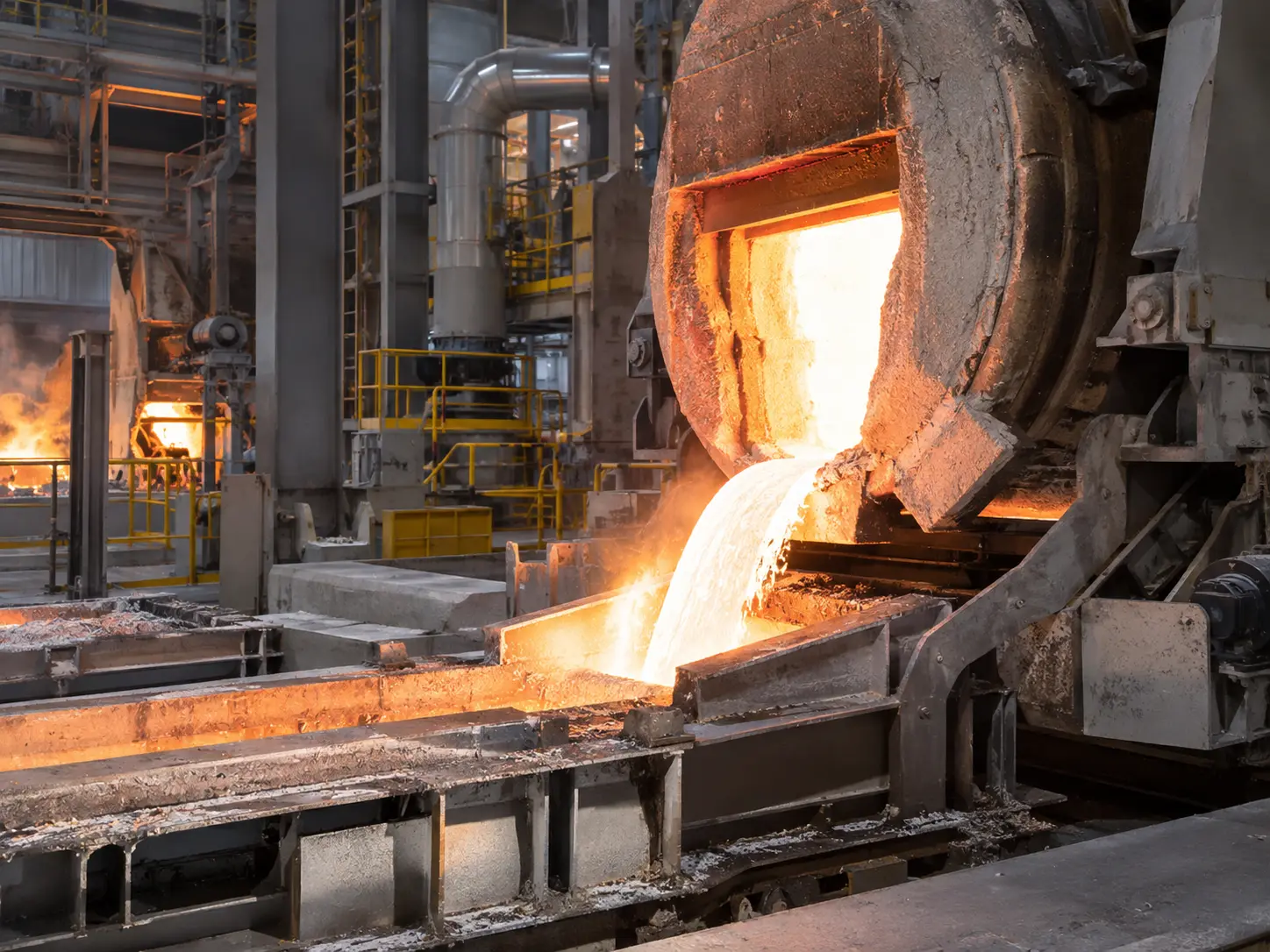
Refractory Requirements — Nonferrous Metals
The nonferrous source material is in two clearly separated halves, and this page keeps them apart. The first half is aluminium: an electrolysis cell scheme with fourteen numbered parts, two further schemes for the aluminium smelter and the holding furnace, and product pages for the silicon carbide, alumina-silica and carbon based materials that go into them. The second half is headed Refractories for Copper, Zinc, Lead and Nickel industries and lists a different material range built on magnesia-chrome brick.
For copper the picture is sharper still. The nonferrous technical reference gives four lining drawings, for the flash furnace, the ISASMELT melting furnace, the PS converter and the anode furnace, and each drawing keys specific magnesia-chrome grades to specific positions. The anode furnace is the only one of the four to state its zones as a written list: slag zone, end wall, molten bath, wind eye block and tapping hole block.
For zinc, lead and nickel the technical reference is thinner. It lists the materials supplied to those industries but names only one piece of equipment, the zinc volatilization kiln. The table below reflects that difference rather than smoothing it over: copper rows carry an equipment position, the zinc, lead and nickel rows carry the material range as the technical reference presents it.
Where Refractories Are Used
8 equipment and zones
Aluminium Electrolysis Cell
Refractories Conformation Scheme for Aluminum Electrolysis Cell
The technical reference scheme numbers fourteen parts of the cell, among them the anode carbon block, the cathode carbon block, the silicon carbide brick side wall, the insulation brick and the steel shell.
Aluminium Smelter and Holding Furnace
Refractories Conformation Scheme for Aluminum Smelter / for Holder
The technical reference gives two separate schemes, one for the melting furnace and one for the holder, each keyed to its own numbered list of castable, plastic and fibre materials.
Aluminium Casting and Low-Pressure Systems
The technical reference names the casting port and the aluminium heating pipes, riser pipes, heat exchange pipes and thermocouple protecting pipes used in melting, refining and low-pressure casting and rolling.
Copper Flash Furnace
REFRACTORIES FOR FLASH FURNACE
The nonferrous technical reference's drawing keys three magnesia-chrome grades to different positions of the shaft and settler.
ISASMELT Melting Furnace
REFRACTORIES FOR ISASMELT MELTING FURNACE
The drawing keys four magnesia-chrome grades from the offtake down to the bottom of the barrel.
PS Converter
REFRACTORIES FOR PS CONVERTER
The drawing keys semi-rebonded brick to the end walls and barrel and fused rebonded grades to the mouth and tuyere area.
Copper Anode Furnace
ANODE FURNACE
The only source that states its zones as a written list: slag zone, end wall, molten bath, wind eye block and tapping hole block.
Zinc, Lead and Nickel
Refractories for Copper, Zinc, Lead and Nickel industries
The technical reference lists the material range for these industries. The only equipment it names explicitly is the zinc volatilization kiln.
Refractory Selection by Equipment
Aluminium Electrolysis Cell
14| Zone | Refractory type | RISING product | Why used |
|---|---|---|---|
| Side wall of the cell | Si₃N₄ Bonded SiC Side Wall Brick | Good cryolite corrosion resistance, strong oxidation resistance, high temperature strength and strong thermal conductivity. | |
| Cell corner, and filling the side distortion of an old cell | Si₃N₄ Bonded SiC Corner Brick | ||
| Side wall, combined with the carbon block | Si₃N₄ Bonded SiC Composite Brick | Combines silicon nitride bonded silicon carbide side wall brick and carbon block into one body for masonry on the cell side wall. | |
| Cell corner; filling or repairing the deformed side area of a used cell | Silicon Carbide Castable | On request | |
| Cell corners and the top of the side blocks | Silicon Carbide Ramming Mix | On request | |
| Masonry of the silicon nitride bonded silicon carbide bricks | Silicon Carbide Refractory Mortar | ||
| Composite masonry of silicon nitride bonded SiC brick and carbon block | Refractory Mortar For Composite Bricks | ||
| Barrier layer in the bottom of the cell | Dry barrier material | On request | |
| Side and collector bar area | High strength castable | On request | |
| Insulation areas such as cell bottom and cell end | Light weight castable | ||
| Masonry of lightweight bricks | Insulating refractory mortar | ||
| Buffer of the cell; monolithic lining of small-scale cells; gaps among carbon blocks and furnace shell | Regular Paste (carbon) | On request | |
| Wide gaps between bottom and side carbon blocks, and gaps between refractory bricks | Semi graphite hot and cold ramming paste, peripheral paste | On request | |
| Small gaps between the carbon blocks | Carbon Mortar | On request |
Aluminium Smelter and Holding Furnace
8| Zone | Refractory type | RISING product | Why used |
|---|---|---|---|
| Working lining of molten bath and furnace roof | Low Cement Castable (Al₂O₃ 40 %) | High strength and stable performance from bauxite or flint clay with calcium aluminate cement as the binder. | |
| Furnace door, chimney, door frame and door lintel | Low Cement Castable (Al₂O₃ 65 %) | ||
| Molten bath, lower furnace wall, plug, temperature determination area, aluminium taphole, door frame and lintel | Non-stick Alumina Castable | On request | Good resistance to aluminium liquid infiltration from an anti-wetting agent and an optimised matrix composition. |
| Taphole of aluminium, burner block and exhaust port area | High Alumina Plastic Refractory | Long shelf life, good thermal shock resistance and good construction performance from a phosphate binder. | |
| Insulation layer of furnace wall, roof and bottom | Light Weight Insulating Castable 1.0 | Mullite lightweight aggregate and floating beads with aluminate cement give good insulation and high strength. | |
| Furnace door and flue | Light Weight Insulating Castable 1.2 | ||
| Insulation layer of the furnace roof | Light Weight Insulating Castable 0.8 | ||
| Back-up insulation | Ordinary Aluminum Silicate Fiber Board |
Aluminium Casting and Low-Pressure Systems
2| Zone | Refractory type | RISING product | Why used |
|---|---|---|---|
| Casting port of aluminium and aluminium alloy melting and refining | Si₃N₄ Bonded SiC Port Bricks | High temperature resistance, corrosion and erosion resistance to molten aluminium, no pollution of the melt and good thermal shock resistance. | |
| Aluminium smelting, refining and low-pressure casting and rolling | Si₃N₄ Bonded SiC Pipe Products: heating pipes, riser pipes, heat exchange pipes and thermocouple protecting pipes | On request |
Copper Flash Furnace
3| Zone | Refractory type | RISING product | Why used |
|---|---|---|---|
| Upper shaft positions | Directly bonded magnesia-chrome brick RS-ZMGe-16 | ||
| Shaft and settler wall positions | Semi-rebonded magnesia-chrome brick RS-BMGe-20 | ||
| Settler bottom and hearth positions | Fused rebonded magnesia-chrome brick RS-DMGe-22 |
ISASMELT Melting Furnace
4| Zone | Refractory type | RISING product | Why used |
|---|---|---|---|
| Upper barrel and offtake | Directly bonded magnesia-chrome brick RS-ZMGe-16 | ||
| Upper barrel | Semi-rebonded magnesia-chrome brick RS-BMGe-20 | ||
| Mid and lower barrel | Fused rebonded magnesia-chrome brick RS-DMGe-20 / RS-DMGe-22 | ||
| Bottom | Fused rebonded magnesia-chrome brick RS-DMGe-24 |
PS Converter
3| Zone | Refractory type | RISING product | Why used |
|---|---|---|---|
| End walls and barrel | Semi-rebonded magnesia-chrome brick RS-BMGe-20 | ||
| Mouth area | Fused rebonded magnesia-chrome brick RS-DMGe-20 | ||
| Tuyere area and tuyere line | Fused rebonded magnesia-chrome brick RS-DMGe-22 / RS-DMGe-24 |
Copper Anode Furnace
5| Zone | Refractory type | RISING product | Why used |
|---|---|---|---|
| Slag zone | Magnesia Chrome Brick RS-DMGe-20 | ||
| End wall | Magnesia Chrome Brick RS-BMGe-18 | ||
| Molten bath | Magnesia Chrome Brick RS-BMGe-18 | ||
| Wind eye block | Electric-fused rebonded magnesia-chrome brick RS-DMGe-20 | ||
| Tapping hole block | Electric-fused rebonded magnesia chrome brick RS-DMGe-20 |
Zinc, Lead and Nickel
9| Zone | Refractory type | RISING product | Why used |
|---|---|---|---|
| Material range listed for these industries | Magnesia Chrome Brick and Direct-bonded Magnesia Chrome Brick | Direct-bonded types are stated to have low porosity, high crushing strength, strong wear resistance, corrosion resistance, thermal shock resistance and good peeling resistance. | |
| Material range listed for these industries | Semi-rebonded and Fused Rebonded Magnesia Chrome Brick | Semi-rebonded brick is stated to combine the thermal shock resistance of direct-bonded brick with the corrosion resistance of fused rebonded brick. | |
| Zinc volatilization kiln | Magnesium-aluminum-chromium Composite Spinel Brick | On request | Developed for the zinc volatilization kiln; stated to have excellent scouring and erosion resistance together with good peeling resistance. |
| Material range listed for these industries | Series of Magnesia Bricks (high purity sintered and fused rebonded) | ||
| Material range listed for these industries | High Alumina Bricks | ||
| Material range listed for these industries | Phosphate Bonding High Alumina Bricks | ||
| Material range listed for these industries | Chrome Corundum Brick | ||
| Material range listed for these industries | Fire Clay Bricks | On request | |
| Material range listed for these industries | Magnesia Aluminum Brick | On request | Stated to have corrosion resistance, alkali steam erosion resistance and excellent thermal shock resistance. |
Refractory types are listed as named in RISING's technical references. A row reads "On request" where the material has no catalogue page yet.
Lining System Overview
Recommended Refractory Materials
11 linked products
Silicon Carbide Products
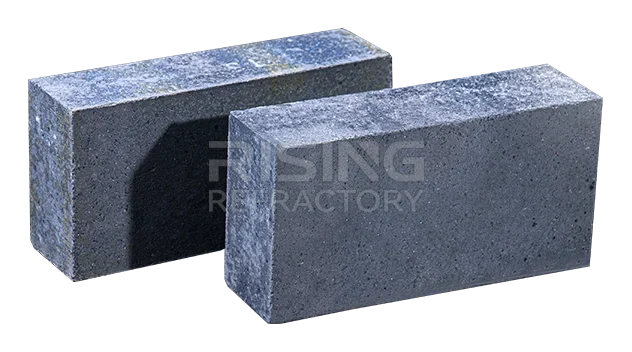
Silicon Carbide Brick
Non-oxide silicon carbide brick with high wear and corrosion resistance, high hot strength, high thermal conductivity and low thermal expansion, in six bonding types from SiO₂-bonded to recrystallized.
View ProductGradesSiO₂ · Clay · Si₃N₄ · Sialon · Self Bonded · Recrystallized
Monolithic Refractories
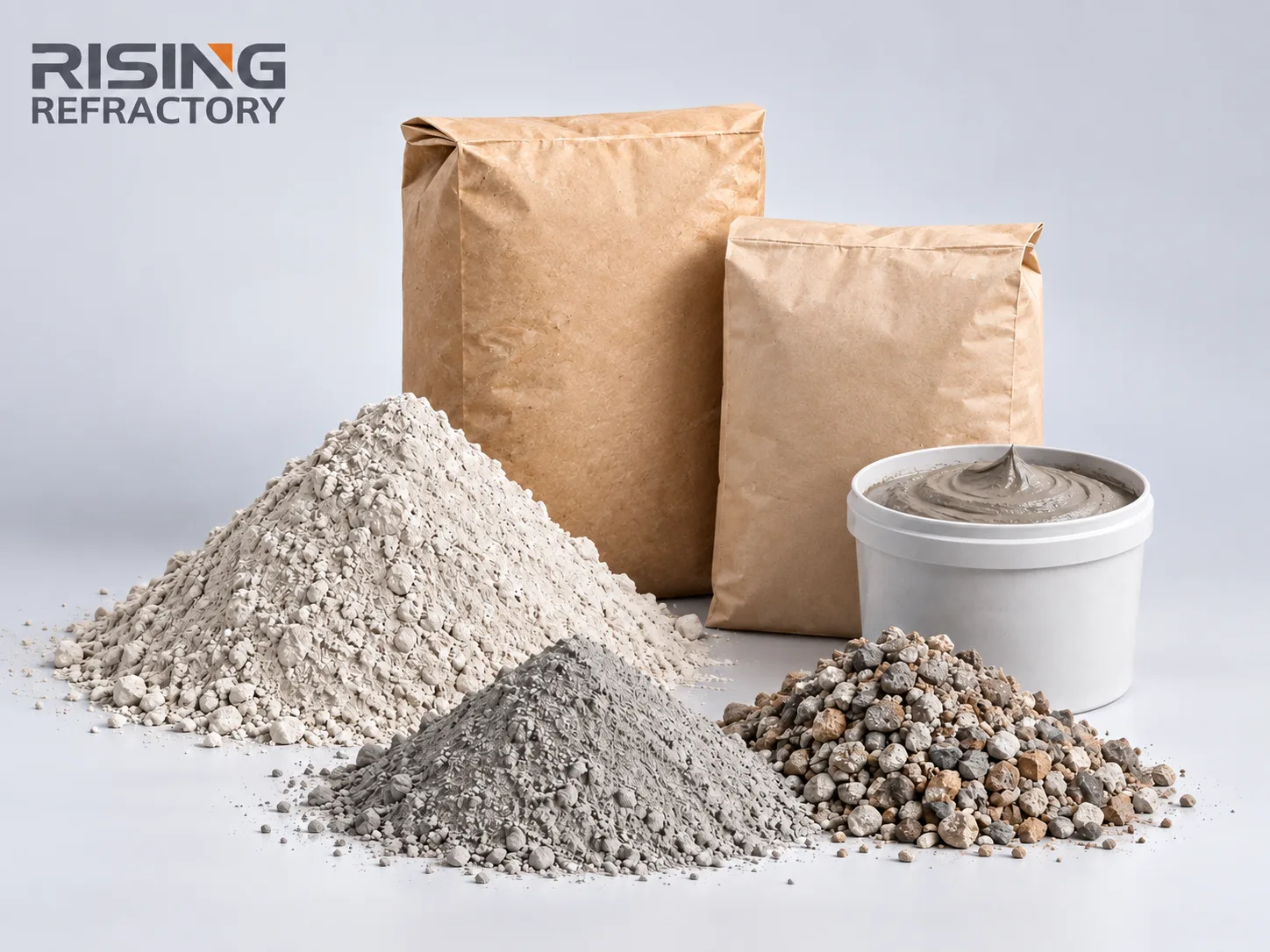
Refractory Mortar
Refractory mortars for brick masonry in four material systems: silica, alumina-silicate, alkaline (magnesia) and silicon carbide / carbon, each with its own grades and specification table.
View ProductGradesGNR94 · GNJ94 · GNB94 · GNB96 · LN65 · LN75 · LN65P · LN75P · GN85P · GN90P · MN91 · MN95 · MN97 · MLN70 · MLN80 · SCN · TN-1 · TN-2 · TN-3
Monolithic Refractories
Lightweight Insulation Castable
Low-density insulating castable with low thermal conductivity, excellent thermal insulation and convenient installation, reducing furnace heat loss and lining weight. Grades LW0.6 to LW1.3.
View ProductGradesLW0.6 · LW0.8 · LW1.0 · LW1.1 · LW1.3
Monolithic Refractories
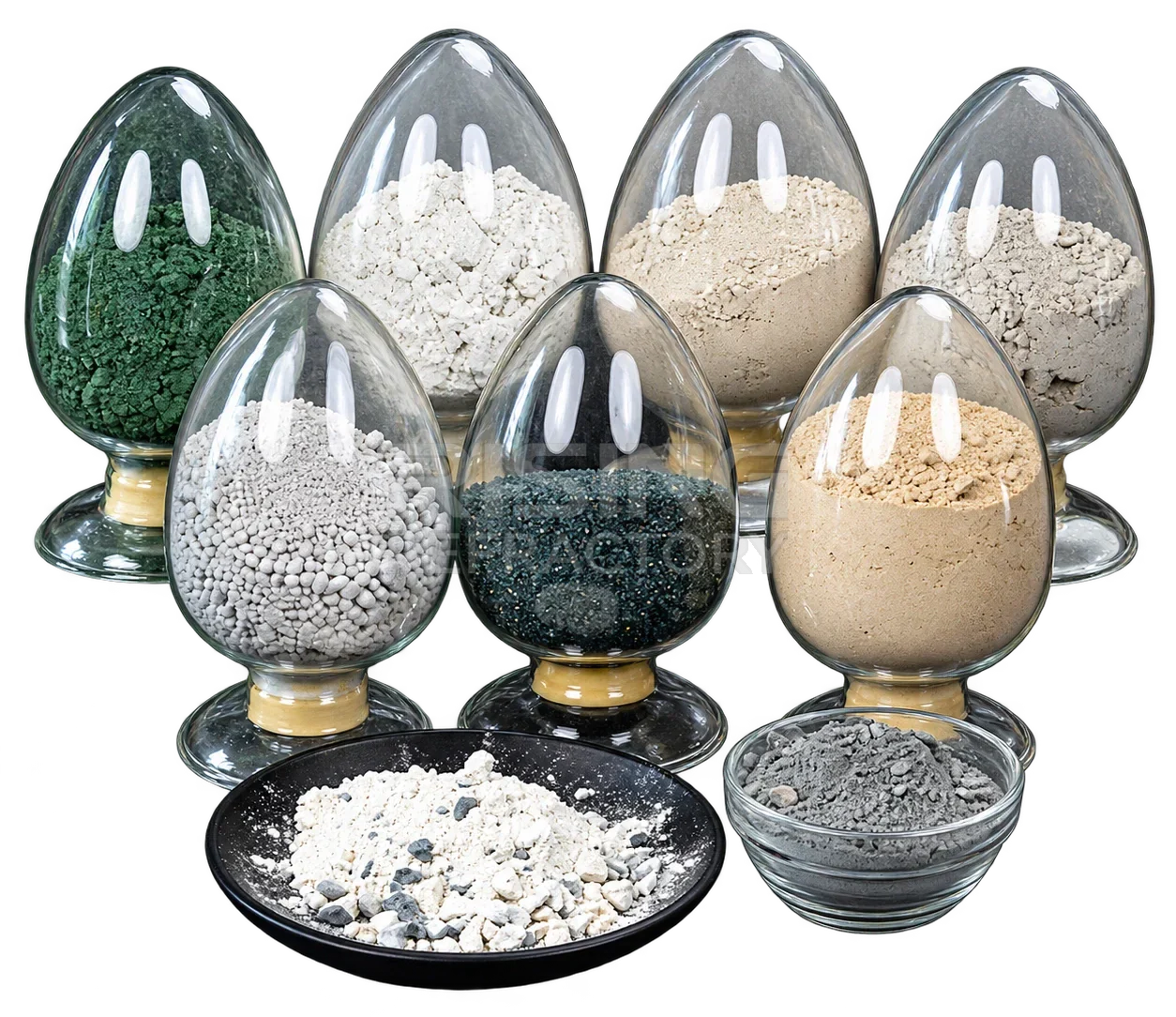
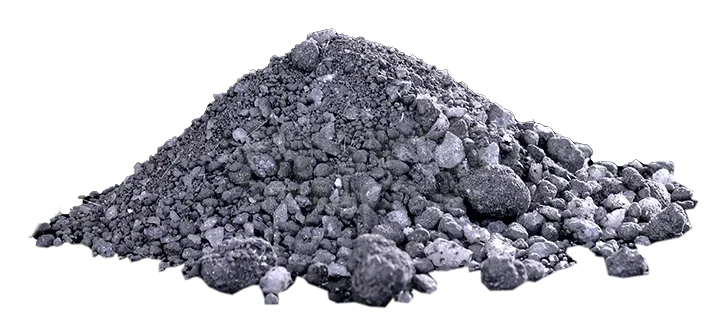
Low & Ultra-Low Cement Castable
Dense low- and ultra-low-cement castables in clay, high alumina and corundum materials, with small pore size, high density, good volume stability, high strength and low water addition.
View ProductGradesClay · High Alumina · Corundum
Monolithic Refractories
Clay & High Alumina Refractory Plastics
Clay and high alumina refractory plastics with good bonding strength at medium and high temperature, good abrasion resistance, thermal shock resistance and spalling resistance. Grades KSL35 to KSL80.
View ProductGradesKSL35 · KSL40 · KSL60 · KSL75 · KSL80
Ceramic Fiber Products
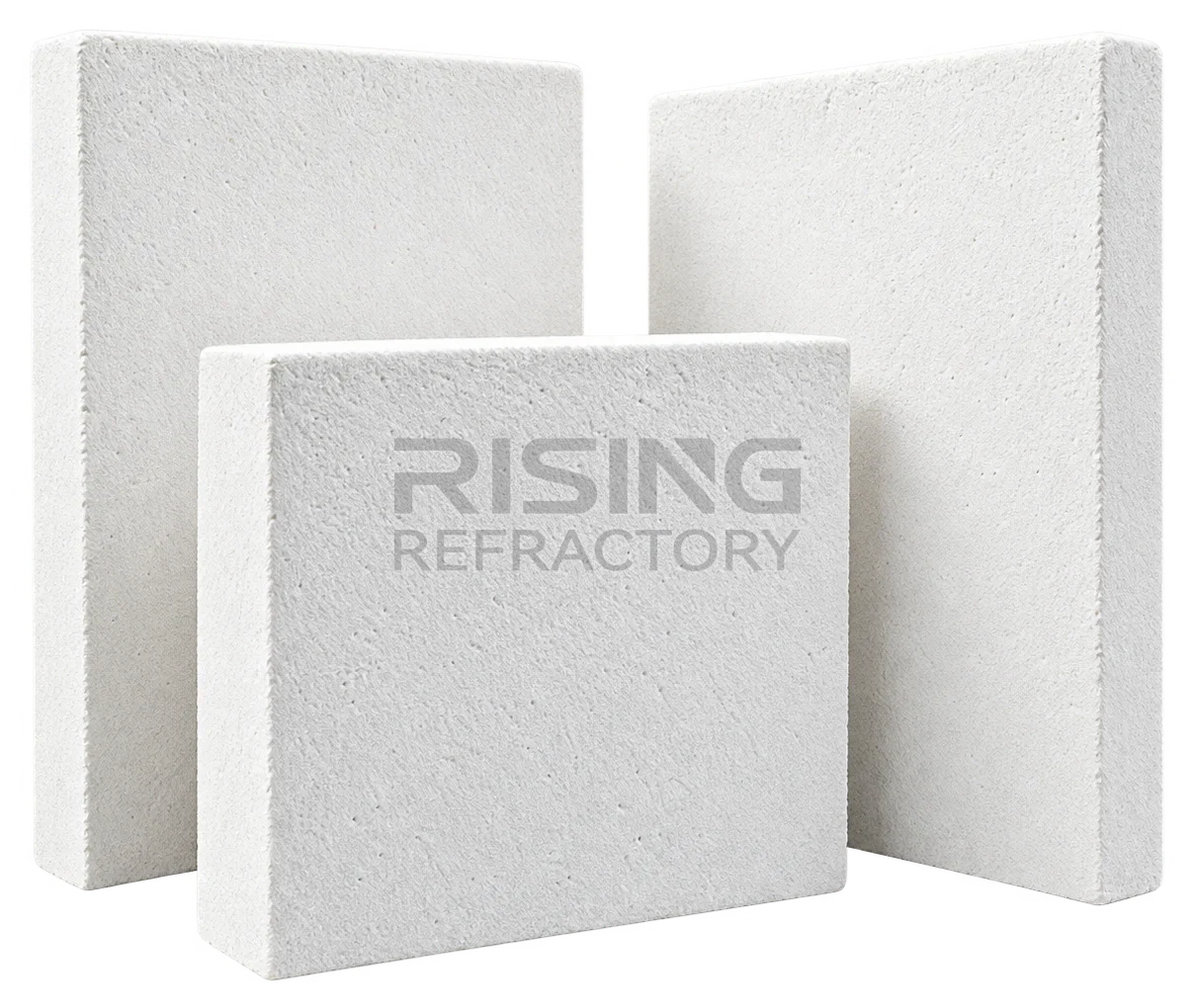
Ceramic Fiber Board
Rigid ceramic fiber board with excellent toughness, strength and wind-erosion resistance, light and easy to cut, for kilns, pipes and other thermal insulation equipment. Standard, high-purity, high-alumina and zirconia grades.
View ProductGradesSTD · HP · HA · HZ
Refractory Bricks
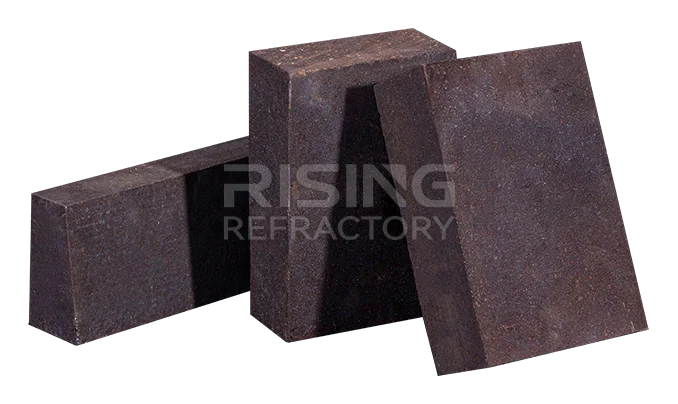
Magnesia Chrome Brick
Basic magnesia–chrome bricks in four product types: ordinary, direct-bonded, fused semi-rebonded and fused rebonded, covering 23 grades for demanding basic-slag service.
View ProductGradesMG-16A · MG-16B · MG-12A · MG-12B · MG-8A · MG-8B · ZMG-16A · ZMG-12A · ZMG-8A · ZMG-6 · BMG-26 · BMG-24 · BMG-22 · BMG-20A · BMG-18 · BMG-16A · BMG-12A · DMG-26 · DMG-24 · DMG-22 · DMG-20 · DMG-16 · DMG-12
Refractory Bricks
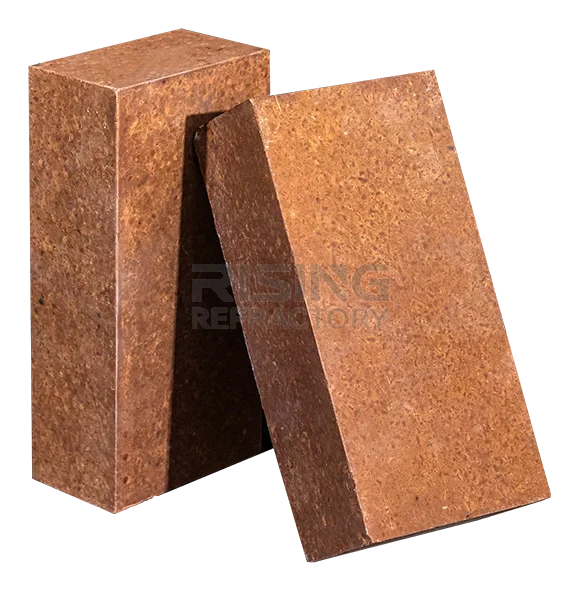
Magnesia Brick
Basic refractory brick with strong resistance to alkaline slag, high refractoriness and high refractoriness under load, in seven grades from M89 to M98.
View ProductGradesM98 · M97A · M97B · M95A · M95B · M91 · M89
Technical Considerations
- Aluminium and the other nonferrous metals are treated separately
- The technical reference manual is in two parts. Pages 10 to 24 cover aluminium electrolysis, smelting and holding. Page 25 onwards is headed Refractories for Copper, Zinc, Lead and Nickel industries and lists a different material range. This page keeps that separation and does not carry a lining from one metal to another.
- What the nonferrous source does and does not map
- The nonferrous technical reference gives position-by-position drawings for the flash furnace, the ISASMELT melting furnace, the PS converter and the anode furnace, and every position in all four is a magnesia-chrome brick grade. It maps no castables and no insulation products to copper equipment.
- Equipment named for zinc, lead and nickel
- For zinc, lead and nickel the technical reference lists a material range rather than a lining scheme. The only equipment it names is the zinc volatilization kiln, for the magnesium-aluminum-chromium composite spinel brick.
Also supplied on request
Further refractory types used in this industry that do not have a catalogue page yet. Each is supplied and quoted on request.
- Non-stick Alumina Castable (RS-NA80)
- Silicon Carbide Castable and Silicon Carbide Ramming Mix for the electrolysis cell
- Dry barrier material and high strength castable for the cell bottom and collector bar area
- Regular Paste, semi graphite hot and cold ramming pastes, peripheral paste, paste among carbon blocks and carbon mortar
- Anode Carbon Block and Cathode Carbon Block, and the carbon block for composite brick
- Si₃N₄ Bonded SiC Pipe Products: aluminium heating pipes, riser pipes, heat exchange pipes and thermocouple protecting pipes
- Si₃N₄ Bonded SiC Port Bricks as a shaped component distinct from the brick
- Magnesium-aluminum-chromium Composite Spinel Brick (RSMAC-A / RSMAC-B)
- Magnesia Aluminum Brick (RSML-80A / RSML-80B / RSML-85), which is not the same product as the catalogue's magnesia-alumina spinel brick
- Fire Clay Bricks (RSN-1 to RSN-3b)
Related Product Families
Silicon Carbide Products
Silicon carbide refractory materials and engineered components for demanding wear, corrosion and high-temperature service.
Refractory Bricks
Shaped refractory products for steel, cement, glass, nonferrous, power and industrial furnace applications, in multiple material systems and custom shapes.
Monolithic Refractories
Castables, ramming materials, mortars and other unshaped refractory systems for new linings, maintenance and repair.
Thermal Insulation Materials
Insulating bricks, boards and lightweight refractory systems designed to reduce heat loss and support multilayer lining construction.
Ceramic Fiber Products
Lightweight high-temperature fiber products for furnace insulation, lining, sealing and thermal management.
Reference documents
- RISING nonferrous refractory technical reference
Technical Consultation
Discuss Your Furnace or Lining Requirement
Send us the equipment, the operating zone and the service conditions. Our engineers confirm the grade and return a structured quotation.