
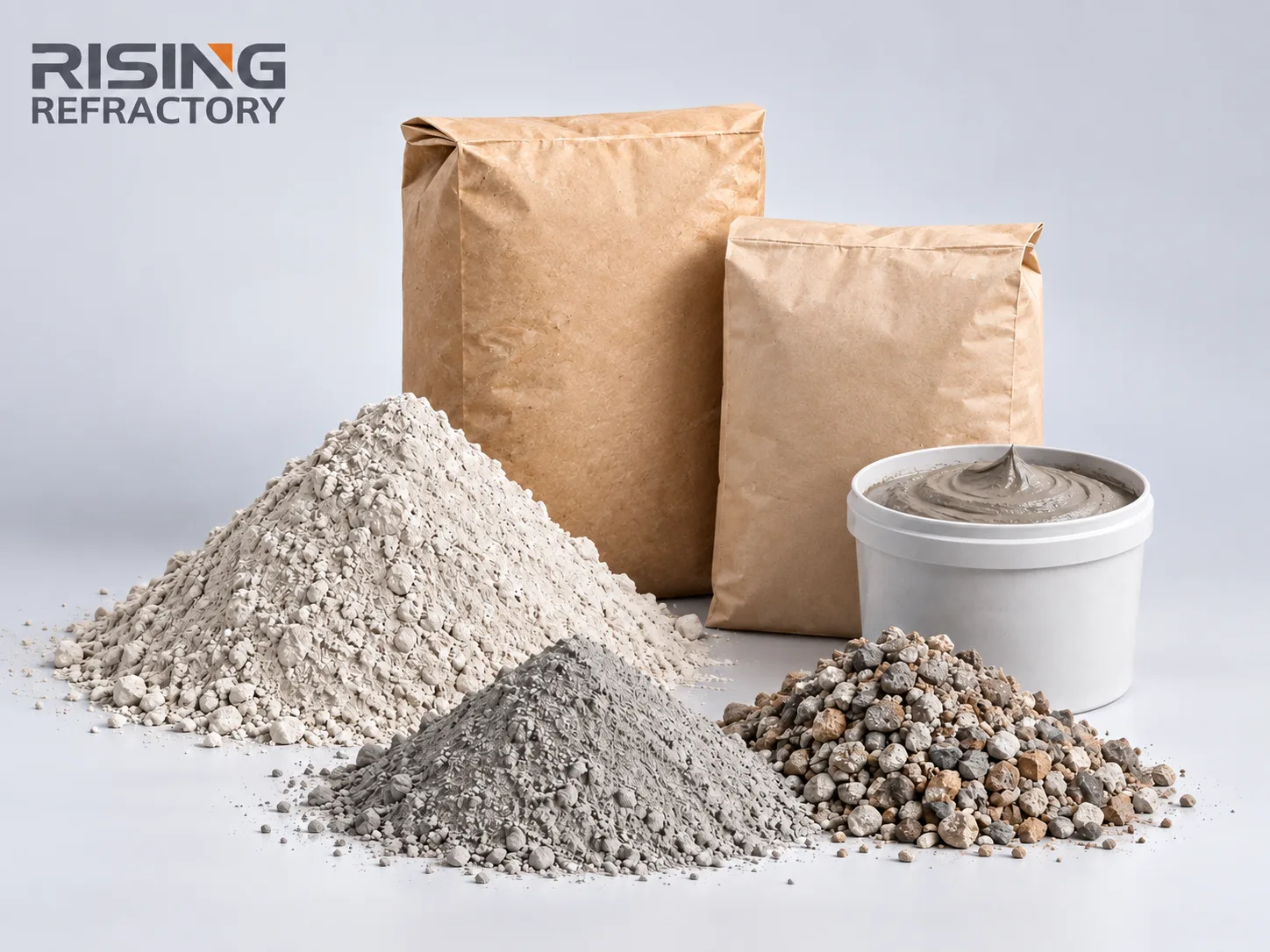
Monolithic RefractoriesMortars
Refractory Mortar
Refractory mortars for brick masonry in four material systems: silica, alumina-silicate, alkaline (magnesia) and silicon carbide / carbon, each with its own grades and specification table.
- Grades / types
- 19 grades, GNR94 to TN-3
- Specification tables
- 4: Silica mortar; Alumina-silicate mortar; Alkaline mortar; Silicon carbide and carbon mortar
Product overview
RISING REFRACTORY supplies jointing mortars matched to the brick material of the lining. Four systems are specified below.
Silica mortar
Widely used in high-temperature equipment such as coke ovens, hot blast stoves and glass kilns, and for insulating silica brick. It has high refractoriness, a high refractoriness under load and a practical bonding time. Grades GNR94 to GNB96.
Alumina-silicate mortar
High bonding strength, a stable overall masonry structure, good air-tightness, good chemical stability and long service life. It has good workability in use and low shrinkage after firing. Grades LN65 to GN90P.
Alkaline mortar
Based on magnesium oxide, or magnesium oxide with calcium oxide. It has high refractoriness, strong resistance to alkaline slag, high bonding strength and good sealing performance. Grades MN91 to MLN80.
Silicon carbide and carbon mortar
Silicon carbide mortar has the high refractoriness and strong adhesion expected of a refractory mortar, together with good volume stability, good alkali resistance, good thermal shock resistance and low thermal expansion. Grades SCN and TN-1 to TN-3.
Key characteristics
- Four material systems matched to the brick lining
- High refractoriness and bonding strength
- Specified bonding time and particle size
- Silica, alumina-silicate, magnesia and SiC / carbon grades
Technical data
| Property | Unit | GNR94 | GNJ94 | GNB94 | GNB96 |
|---|---|---|---|---|---|
| SiO₂ | % | ≥94 | ≥94 | ≥94 | ≥96 |
| Al₂O₃ | % | — | — | ≤1 | ≤0.6 |
| Fe₂O₃ | % | ≤1.0 | — | ≤1.0 | ≤0.7 |
| Refractoriness | ℃ | ≥1680 | ≥1660 | ≥1700 | ≥1720 |
| Cold Flexural Bonding Strength (Drying at 110℃) | MPa | ≥1.0 | ≥1.0 | ≥0.8 | ≥0.8 |
| Cold Flexural Bonding Strength (1400℃×3h) | MPa | ≥2.0 | ≥2.0 | ≥0.8 | ≥0.5 |
| Refractoriness Under Load, 0.2 MPa (RUL) (T2) | ℃ | ≥1580 | ≥1550 | ≥1600 | ≥1620 |
| Bonding Time | min | 1~2 | 1~2 | 2~3 | 2~3 |
| Particle Size (<2mm) | % | 100 | 100 | 100 | 100 |
| Particle Size (>1mm) | % | ≤1 | ≤3 | ≤2 | ≤2 |
| Particle Size (<0.074mm) | % | ≥60 | 50~70 | ≥60 | ≥60 |
| Property | Unit | LN65 | LN75 | LN65P | LN75P | GN85P | GN90P |
|---|---|---|---|---|---|---|---|
| Al₂O₃ | % | ≥65 | ≥75 | ≥65 | ≥75 | ≥85 | ≥90 |
| Refractoriness | ℃ | ≥1760 | ≥1780 | ≥1780 | ≥1780 | ≥1780 | ≥1800 |
| Cold Flexural Bonding Strength (Drying at 110℃) | MPa | ≥1 | ≥1 | ≥2 | ≥2 | ≥2 | ≥2 |
| Cold Flexural Bonding Strength (1400℃×3h) | MPa | ≥4 | ≥4 | ≥6 | ≥6 | — | — |
| Cold Flexural Bonding Strength (1500℃×3h) | MPa | — | — | — | — | ≥6 | ≥6 |
| Refractoriness Under Load, 0.2 MPa (RUL) (T2) | ℃ | — | — | ≥1400 | ≥1400 | ≥1600 | ≥1650 |
| Permanent Linear Change (PLC) (1400℃×3h) | % | -5~+1 | -5~+1 | -5~+1 | -5~+1 | — | — |
| Permanent Linear Change (PLC) (1500℃×3h) | % | — | — | — | — | -5~+1 | -5~+1 |
| Bonding Time | min | 1~3 | 1~3 | 1~3 | 1~3 | 1~3 | 1~3 |
| Particle Size (<1mm) | % | 100 | 100 | 100 | 100 | 100 | 100 |
| Particle Size (>0.5mm) | % | ≤2 | ≤2 | ≤2 | ≤2 | ≤2 | ≤2 |
| Particle Size (<0.074mm) | % | ≥50 | ≥50 | ≥50 | ≥50 | ≥40 | ≥40 |
| Property | Unit | MN91 | MN95 | MN97 | MLN70 | MLN80 |
|---|---|---|---|---|---|---|
| MgO | % | ≥91 | ≥95 | ≥97 | ≥70 | ≥80 |
| Al₂O₃ | % | — | — | — | 8~20 | 5~10 |
| Cold Flexural Bonding Strength (Drying at 110℃) | MPa | ≥1.5 | ≥1.5 | ≥1.5 | ≥1.5 | ≥1.5 |
| Cold Flexural Bonding Strength (1500℃×3h) | MPa | ≥3.0 | ≥3.0 | ≥3.0 | ≥3.0 | ≥3.0 |
| Permanent Linear Change (PLC) (1500℃×3h) | % | -4~+1 | -4~+1 | -4~+1 | -4~+1 | -4~+1 |
| Bonding Time | min | 1~3 | 1~3 | 1~3 | 1~3 | 1~3 |
| Particle Size (<1mm) | % | 100 | 100 | 100 | 100 | 100 |
| Particle Size (>0.5mm) | % | ≤2 | ≤2 | ≤2 | ≤2 | ≤2 |
| Particle Size (<0.074mm) | % | ≥60 | ≥60 | ≥60 | ≥60 | ≥60 |
| Property | Unit | SCN | TN-1 | TN-2 | TN-3 |
|---|---|---|---|---|---|
| SiC | % | ≥85 | — | — | — |
| Fixed Carbon | % | — | ≥50 | ≥55 | ≥58 |
| Ash | % | — | ≤7 | ≤5 | ≤2 |
| Volatile | % | — | ≤43 | ≤40 | ≤40 |
| Flexural Bonding Strength (200℃×24h) | MPa | ≥2(110℃×12h) | — | 8 | 8 |
| Flexural Bonding Strength (600℃×3h) | MPa | ≥9(1400℃×3h) | — | 1 | 2.5 |
| Bonding Time | min | 1~3 | — | — | — |
| Bulk Density | g/cm³ | ≥1.7 | — | — | — |
| Seam | mm | — | ≤1 | ≤1 | ≤1 |
Applications
- Silica mortar: coke ovens, hot blast stoves, glass kilns and insulating silica brick masonry
Where Refractories Are Used
Industry
Steel & Iron
Refractories in iron and steel production are used in the blast furnace, hot blast stove, cast house and coke oven on the ironmaking side, and in the hot metal ladle, converter, electric arc furnace, steel ladle, tundish, RH degasser and reheating furnace on the steelmaking side. Material selection varies by operating zone and includes silica, high alumina, magnesia, magnesia-carbon, alumina-silicon carbide-carbon and silicon carbide products together with castables, ramming mixes and mortars.
Explore IndustryIndustry
Nonferrous Metals
Refractories for nonferrous metals divide into two groups. For aluminium they line the electrolysis cell side wall, corners and bottom, the smelter and the holding furnace, using silicon nitride bonded silicon carbide, carbon-based materials, low cement and non-stick castables and insulation. For copper, zinc, lead and nickel they are magnesia-chrome bricks in directly bonded, semi-rebonded and fused rebonded types.
Explore IndustryIndustry
Glass
Refractories in the glass industry line the melting tank, the superstructure, the working end and forehearth, the throat and the regenerator. Different furnace types take different materials, in fused, siliceous and magnesia groups: silica, clay, high alumina, sillimanite, mullite, fused mullite, zirconia-corundum, fused corundum and zirconium-containing refractory bricks.
Explore IndustryIndustry
Cement
Refractories in cement plants line the preheater, the calciner and tertiary air duct, the rotary kiln from the kiln inlet through the safety, transition and burning zones to the kiln outlet, the kiln hood and burner, and the grate cooler. RISING's kiln configuration tables assign alkali-resistant bricks and castables to the preheater system, silicon mullite, magnesia spinel and magnesia-chrome bricks to the kiln zones, and low-cement and steel-fiber castables to the kiln mouths, hood and cooler.
Explore Industry
Available grades, shapes and sizes
Available grades
- GNR94
- GNJ94
- GNB94
- GNB96
- LN65
- LN75
- LN65P
- LN75P
- GN85P
- GN90P
- MN91
- MN95
- MN97
- MLN70
- MLN80
- SCN
- TN-1
- TN-2
- TN-3
Related solutions
Services that work with this family of materials.
Related products
Refractory Bricks
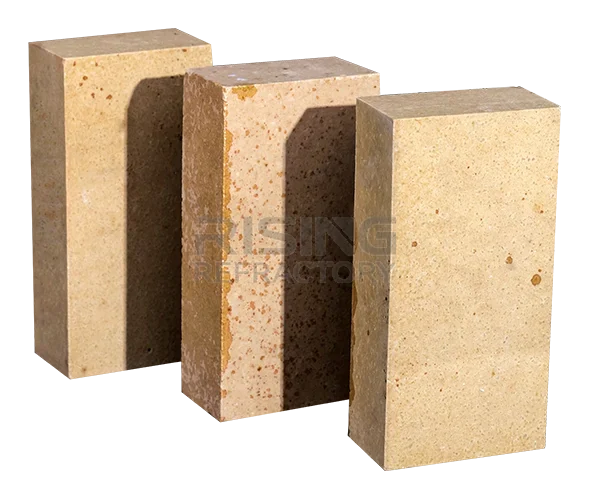
Silica Brick
Silica refractory brick with high hot strength and high refractoriness under load, resistant to acid slag and dimensionally stable in long-term high-temperature service.
View ProductGradesBG-96A · BG-96B · BG-95 · JG-94 · GZ-94
Refractory Bricks
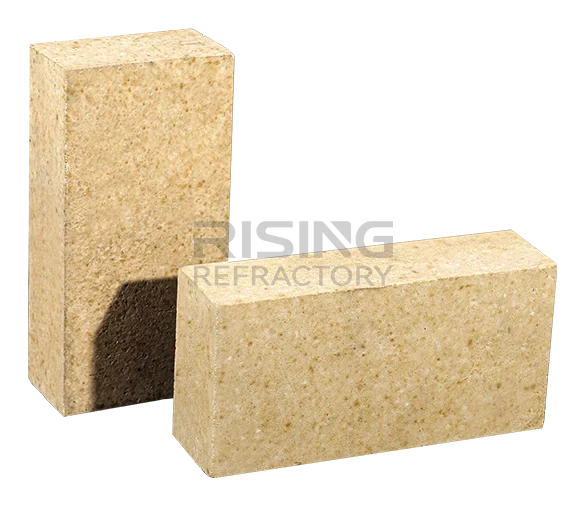
High Alumina Brick
Neutral alumina–silica refractory brick with resistance to both acidic and alkaline slag, high cold crushing strength and high refractoriness under load. Six grades from LZ-48 to LZ-80.
View ProductGradesLZ-80 · LZ-75 · LZ-70 · LZ-65 · LZ-55 · LZ-48
Refractory Bricks
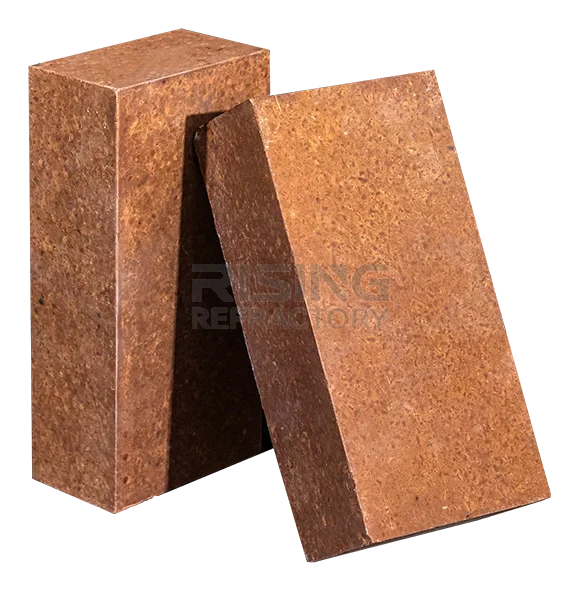
Magnesia Brick
Basic refractory brick with strong resistance to alkaline slag, high refractoriness and high refractoriness under load, in seven grades from M89 to M98.
View ProductGradesM98 · M97A · M97B · M95A · M95B · M91 · M89
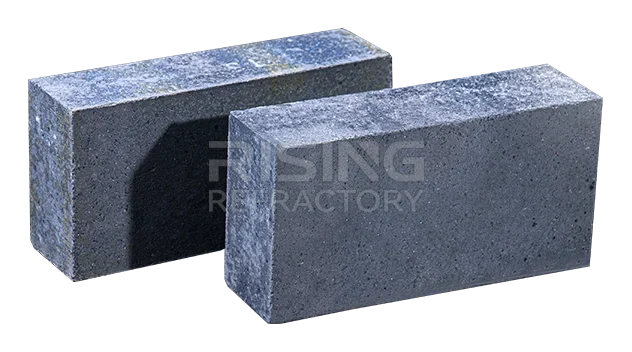
Silicon Carbide Products
Silicon Carbide Brick
Non-oxide silicon carbide brick with high wear and corrosion resistance, high hot strength, high thermal conductivity and low thermal expansion, in six bonding types from SiO₂-bonded to recrystallized.
View ProductGradesSiO₂ · Clay · Si₃N₄ · Sialon · Self Bonded · Recrystallized
Technical Consultation
Discuss your requirement with our technical team
Share your application, service conditions and quantities. Our engineers confirm the suitable grade and return a structured quotation.
Request a quote for prices and lead times, a TDS for the grade’s data sheet, or technical information for a selection or specification question.
Technical data sheets are supplied on request with the quotation.Request TDS