
Technical Guides
Refractory Raw Materials: Alumina and Magnesia
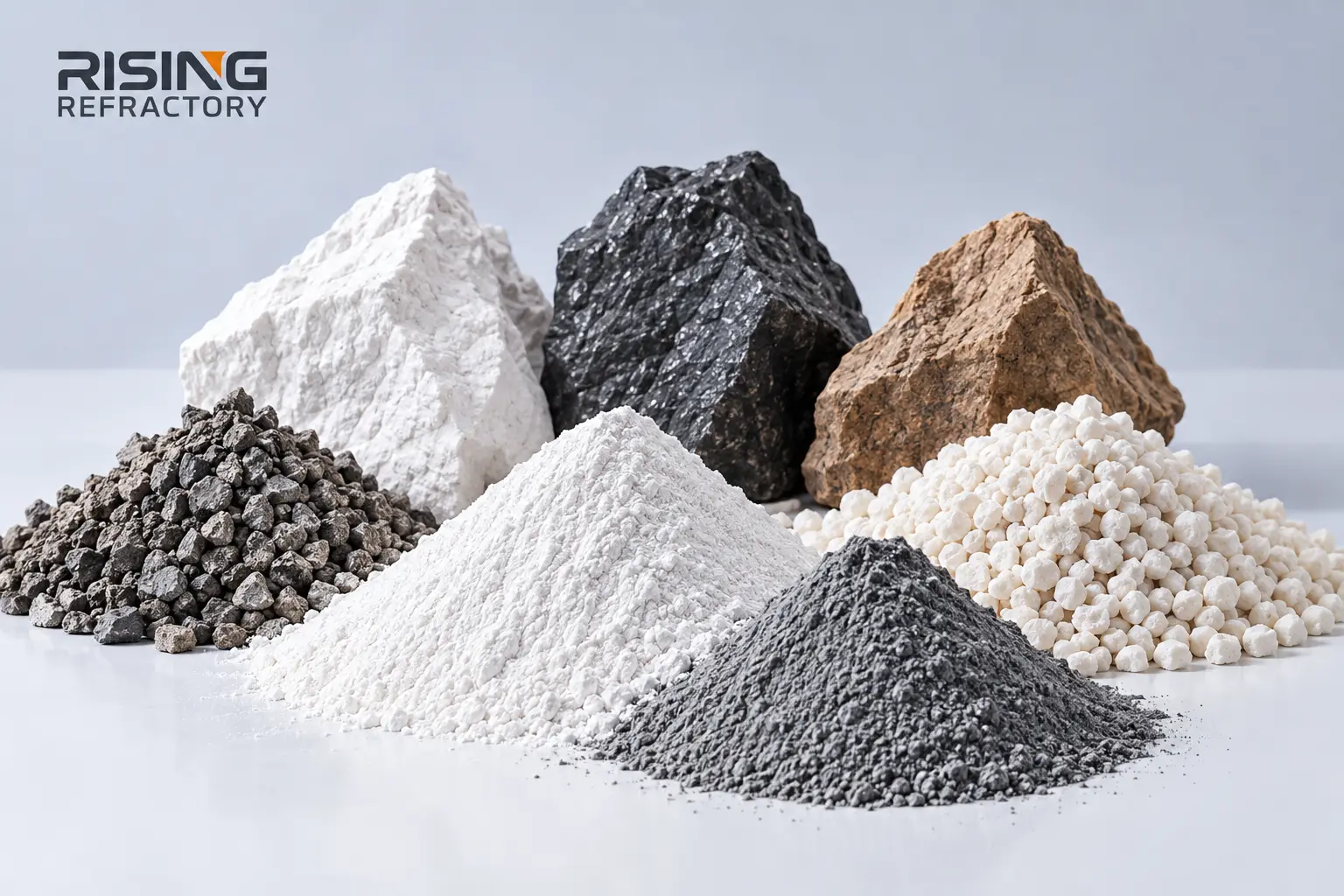
White fused alumina, tabular alumina and calcined bauxite are the alumina-based refractory raw materials; burned magnesia, fused magnesia and large crystal fused magnesia are the magnesia-based ones. Within each group the published specifications separate the materials on purity and bulk density. Alumina content runs from 75 percent in bauxite to 99.5 percent in white fused alumina, and magnesia content from 90 to 98.5 percent.
- Product family
- Refractory Raw Materials
- Products compared
- 6
What are refractory raw materials?
Refractory raw materials are the graded inputs from which shaped and unshaped refractory products are made. RISING REFRACTORY supplies them against a published specification rather than as a finished lining product, and the catalogue lists each one by grade and grain size.
Six of them fall into two chemistries. The alumina-based materials are white fused alumina, tabular alumina and calcined bauxite. The magnesia-based materials are burned magnesia, fused magnesia and large crystal fused magnesia.
Because these are inputs rather than application products, none of the six carries a verified industry mapping on this site. The catalogue states what each material is, not where to use it.
Key differences: the alumina materials
Alumina content is the first separator. White fused alumina is specified at 99.50 percent Al₂O₃ as grain and 99.30 percent as fine powder. Tabular alumina is specified at 99.40 percent in both forms. Calcined bauxite is supplied in four types from GL-75 to GL-88, specified at 75, 80, 85 and 88 percent.
The specifications then diverge on what each one reports. White fused alumina is the only one that states refractoriness, at 1850 °C or above, and hardness, printed as 10 or above on the Mohs scale. Tabular alumina is the only one that states apparent porosity, at 5.0 percent or below, and water absorption, at 1.5 percent or below, alongside a magnetic iron limit of 0.02 to 0.03 percent.
Bulk density rises with the bauxite type, from 2.85 g/cm³ at GL-75 to 3.25 g/cm³ at GL-88, while both high-purity aluminas sit at 3.5 g/cm³ or above.
Key differences: the magnesia materials
The three magnesias are graded on MgO content and each is offered in four grades. Burned magnesia runs BM90 to BM97, at 90 to 97 percent MgO. Fused magnesia runs FM-95 to FM-98, at 95 to 98 percent. Large crystal fused magnesia runs LC-97 to LC-98.5, at 97 to 98.5 percent.
Bulk density follows the same order. Burned magnesia is listed from 3.10 to 3.28 g/cm³, fused magnesia from 3.40 to 3.50 g/cm³, and large crystal fused magnesia from 3.46 to 3.52 g/cm³.
Impurity levels fall as the grade rises. Silica in burned magnesia is listed at 5.0 percent for BM90 and 0.7 percent for BM97; in large crystal fused magnesia it runs from 0.70 percent at LC-97 down to 0.35 percent at LC-98.5.
The catalogue prints these chemical values without ≥ or ≤ signs. They are reproduced here and on the product pages exactly as printed, and are read as the stated grade value rather than as a guaranteed limit.
Grading and supply forms
Grain size is specified separately from chemistry, and the catalogue states one grading list per material that applies to all of that material's grades.
Burned magnesia is listed in eleven sizes from 0-1 mm up to 5-15 mm, including a 200 mesh powder. Fused magnesia and large crystal fused magnesia share a seven-size list running from 0-1 mm and 200 mesh up to 10-150 mm. White fused alumina and tabular alumina are each supplied in two forms, grain and fine powder, and the specification differs slightly between the two.
Selection considerations
What the published specifications support is a comparison on purity, density and declared impurity limits. That is the basis on which these materials are ordered.
The catalogue does not state which material suits which lining, which furnace zone or which service condition, and no such recommendation is made here. Where a requirement turns on a property the tables do not carry, or on current production values rather than catalogue values, the technical team confirms it before quoting.
The product entries state that the values were transcribed from the catalogue and that current production values are confirmed at quotation.
Comparison tables
Figures are copied from the product pages linked below. An empty cell means the specification states no value for that material; nothing has been carried across from another.
Alumina-based raw materials
| Property | Unit | White fused alumina (grain) | Tabular alumina (grain) | Calcined bauxite GL-88 |
|---|---|---|---|---|
| Al₂O₃ | % | ≥99.50 | ≥99.40 | ≥88 |
| SiO₂ | % | ≤0.05 | ≤0.09 | ≤3.5 |
| Fe₂O₃ | % | ≤0.05 | ≤0.07 | ≤1.5 |
| Na₂O | % | ≤0.30 | ≤0.40 | |
| Bulk density | g/cm³ | ≥3.6 | ≥3.5 | ≥3.25 |
| Refractoriness | °C | ≥1850 | ||
| Apparent porosity | % | ≤5.0 | ||
| Water absorption | % | ≤1.5 | ≤3 |
Values as published on the three product pages. An empty cell means the specification states no value for that material.
- Calcined bauxite is supplied in four types. GL-88 is shown as the highest; GL-75, GL-80 and GL-85 are specified at 75, 80 and 85 percent Al₂O₃ with bulk densities of 2.85, 3.0 and 3.15 g/cm³.
- White fused alumina also states Mohs hardness, printed in the specification as "≥10" with the unit "/" and reproduced as stated.
Magnesia-based raw materials, highest grade of each
| Property | Unit | Burned magnesia BM97 | Fused magnesia FM-98 | Large crystal fused magnesia LC-98.5 |
|---|---|---|---|---|
| MgO | % | 97 | 98 | 98.5 |
| SiO₂ | % | 0.7 | 0.5 | 0.35 |
| CaO | % | 1.4 | 1.0 | 0.65 |
| Fe₂O₃ | % | 0.75 | 0.5 | 0.30 |
| Al₂O₃ | % | 0.2 | 0.15 | 0.06 |
| L.O.I | % | 0.13 | 0.1 | 0.06 |
| Bulk density | g/cm³ | 3.28 | 3.50 | 3.52 |
| Grades offered | BM90, BM92, BM95, BM97 | FM-95, FM-96, FM-97, FM-98 | LC-98.5, LC-98, LC-97.5, LC-97 |
The catalogue prints these chemical values without ≥ or ≤ signs. They are reproduced exactly as printed.
- Grain size is stated once in the specification for all grades of each material and is listed on the product pages.
Related products
Each product page carries the full specification table this guide draws on, together with its own source reference.
Refractory Raw Materials
White Fused Alumina (WFA)
White fused alumina (WFA) is supplied as a refractory raw material in two forms, grain and fine powder, according to the specification below.
View ProductGradesGrain · Fine Powder
Refractory Raw Materials
Tabular Alumina
Tabular alumina is supplied as a refractory raw material in two forms, grain and fine powder, according to the specification below.
View ProductGradesGrain · Fine Powder
Refractory Raw Materials
Calcined Bauxite
Calcined bauxite is supplied as a refractory raw material in four types, GL-75, GL-80, GL-85 and GL-88, according to the specification below.
View ProductGradesGL-75 · GL-80 · GL-85 · GL-88
Refractory Raw Materials
Burned Magnesia
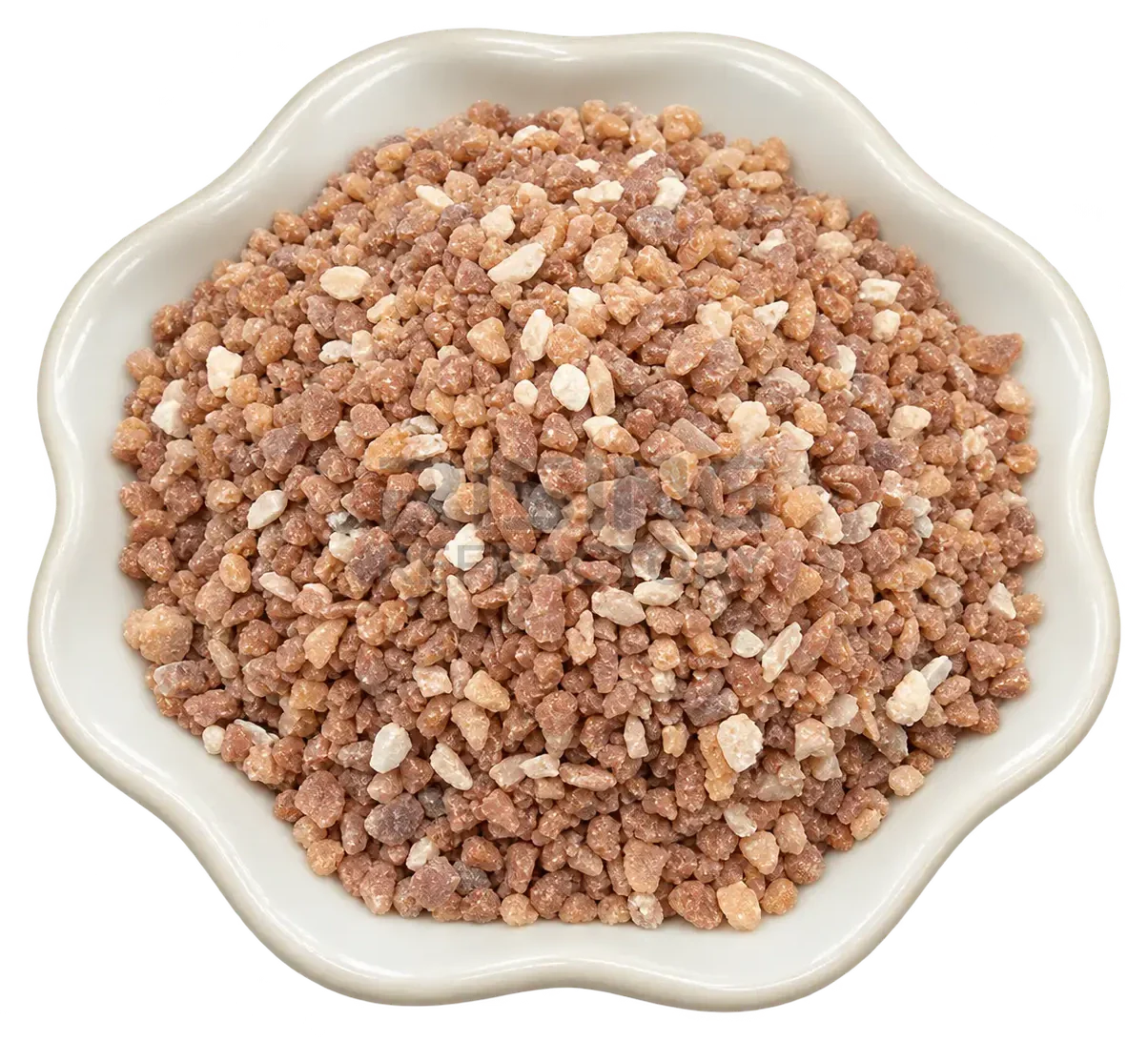
Burned magnesia is supplied as a refractory raw material in four grades, BM90 to BM97, and in the grain sizes listed in the specification below.
View ProductGradesBM90 · BM92 · BM95 · BM97
Refractory Raw Materials
Fused Magnesia (FM)
Fused magnesia (FM) is supplied as a refractory raw material in four grades, FM-95 to FM-98, in the grain sizes listed in the specification below.
View ProductGradesFM-95 · FM-96 · FM-97 · FM-98
Refractory Raw Materials
Large Crystal Fused Magnesia
Large crystal fused magnesia is supplied as a refractory raw material in four grades, LC-98.5 to LC-97, in the grain sizes listed in the specification below.
View ProductGradesLC-98.5 · LC-98 · LC-97.5 · LC-97
More products in this family
The rest of the product family this guide covers.
Need a technical data sheet or specification?
Published technical tables cover every catalogue product. A data sheet for a specific grade, quantity or service condition is issued by the technical team on request.